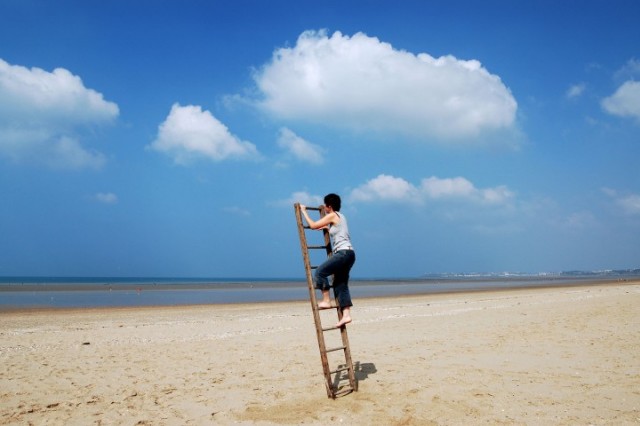
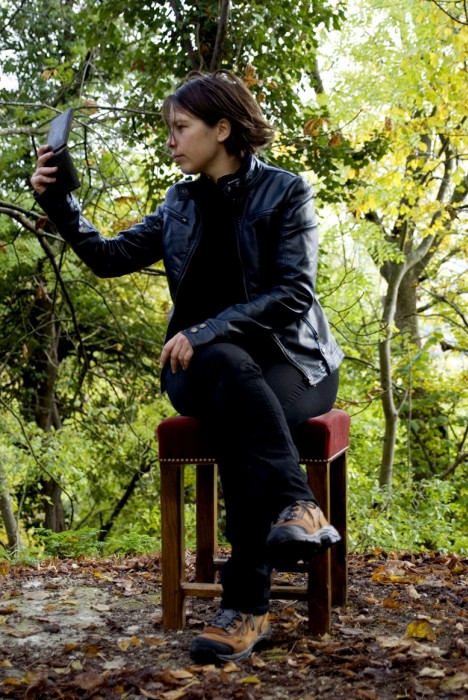
• auto-portrait

Pauline Fouché's artistic approach is recurrently engaged with photography as such. She explores the photographic medium in itself, both as a technical procedure and as generating different devices. Her work presents itself often through installations and photographic series. Her camerawork as well as her installations use devices that reveal the relationships between the photographer, the model and the photograph as object. These devices are often accompanied by protocols that allow the relationships' existence and organize it. The photographer, here, is a stage director observing the behavior of the subject creating its own image.

To photograph is to question both otherness and the self. How do we see a photograph? Is it an image of the self or of the other? What does it mean, both for the photographer and the person photographed, to own somebody's image? To photograph oneself or to be photographed?

In an almost systematic way, Pauline Fouché works on developing a photographic conscience. When we photograph someone, the person unconsciously stages herself or wants to play a role. The photographic unconscious resides not only in the image it represents but also in the object itself. An important part of her work lies in the misappropriation of the act of photographing and that of the photograph as object. In her series, installations or videos, she wants to show a different aspect of the photographic image, legitimizing it or not. She pushes further the limits of its frame, she adjusts it, transforms it, gives it back a lost movement, a pigmentation, a space, time… Photography as installation, experimentation and thought.

Whatever it shows and whatever its manner might be, a photograph remains always invisible: it is not it that we see. Roland Barthes.